This volume assembles the work of leading international scholars in a comprehensive history of Russian literary theory and criticism from 1917 to the post-Soviet age. By examining the dynamics of literary criticism and theory in three arenas—political, intellectual, and institutional—the authors capture the progression and structure of Russian literary criticism and its changing function and discourse.
The chapters follow early movements such as formalism, the Bakhtin Circle, Proletklut, futurism, the fellow-travelers, and the Russian Association of Proletarian Writers. By the cultural revolution of 1928, literary criticism became a mechanism of Soviet policies, synchronous with official ideology. The chapters follow theory and criticism into the 1930s with examinations of the Union of Soviet Writers, semantic paleontology, and socialist realism under Stalin. A more “humanized” literary criticism appeared during the ravaging years of World War II, only to be supplanted by a return to the party line, Soviet heroism, and anti-Semitism in the late Stalinist period. During Khrushchev’s Thaw, there was a remarkable rise in liberal literature and criticism, that was later refuted in the nationalist movement of the “long” 1970s. The same decade saw, on the other hand, the rise to prominence of semiotics and structuralism. Postmodernism and a strong revival of academic literary studies have shared the stage since the start of the post-Soviet era.
For the first time anywhere, this collection analyzes all of the important theorists and major critical movements during a tumultuous ideological period in Russian history, including developments in émigré literary theory and criticism.
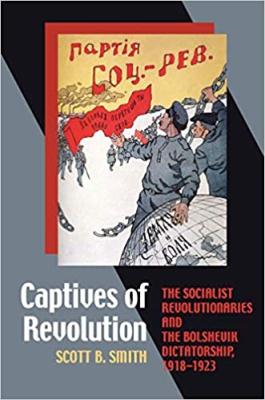
Captives of Revolution: The Socialist Revolutionaries and the Bolshevik Dictatorship, 1918-1923
The Socialist Revolutionaries (SRs) were the largest political party in Russia in the crucial revolutionary year of 1917. Heirs to the legacy of the People’s Will movement, the SRs were unabashed proponents of peasant rebellion and revolutionary terror, emphasizing the socialist transformation of the countryside and a democratic system of government as their political goals. They offered a compelling, but still socialist, alternative to the Bolsheviks, yet by the early 1920s their party was shattered and its members were branded as enemies of the revolution. In 1922, the SR leaders became the first fellow socialists to be condemned by the Bolsheviks as “counter-revolutionaries” in the prototypical Soviet show trial. Scott B. Smith presents both a convincing account of the defeat of the SRs and a deeper analysis of the significance of the political dynamics of the Civil War for subsequent Soviet history. Smith reveals a complex and nuanced picture of the postrevolutionary struggle and demonstrates that the Civil War—and in particular the struggle with the SRs—was the formative experience of the Bolshevik party and the Soviet state.
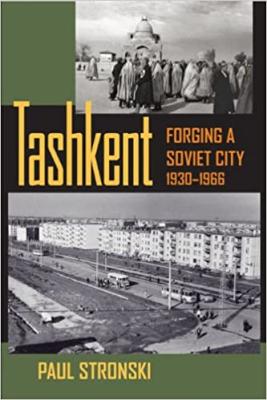
Paul Stronski tells the fascinating story of Tashkent, an ethnically diverse, primarily Muslim city that became the prototype for the Soviet-era reimagining of urban centers in Central Asia. Based on extensive research in Russian and Uzbek archives, Stronski shows us how Soviet officials, planners, and architects strived to integrate local ethnic traditions and socialist ideology into a newly constructed urban space and propaganda showcase.
The Soviets planned to transform Tashkent from a “feudal city” of the tsarist era into a “flourishing garden,” replete with fountains, a lakeside resort, modern roadways, schools, hospitals, apartment buildings, and of course, factories. The city was intended to be a shining example to the world of the successful assimilation of a distinctly non-Russian city and its citizens through the catalyst of socialism. As Stronski reveals, the physical building of this Soviet city was not an end in itself, but rather a means to change the people and their society.
Stronski analyzes how the local population of Tashkent reacted to, resisted, and eventually acquiesced to the city’s socialist transformation. He records their experiences of the Great Terror, World War II, Stalin’s death, and the developments of the Krushchev and Brezhnev eras up until the earthquake of 1966, which leveled large parts of the city. Stronski finds that the Soviets established a legitimacy that transformed Tashkent and its people into one of the more stalwart supporters of the regime through years of political and cultural changes and finally during the upheavals of glasnost.
The Soviets are often viewed as insatiable industrialists who saw nature as a force to be tamed and exploited. Song of the Forest counters this assumption, uncovering significant evidence of Soviet conservation efforts in forestry, particularly under Josef Stalin. Stephen Brain profiles the leading Soviet-era conservationists, agencies, and administrators, and their efforts to formulate forest policy despite powerful ideological differences.
The influence of liberalism in tsarist Russia is deeply problematic to most historians. In this highly original study, Victor Leontovitsch offers a reinterpretation of liberalism in a uniquely Russian form. He documents the struggles to develop civil society and individual liberties in imperial Russia up until their ultimate demise in the face of war, revolution, and the collapse of the old regime.
From Catherine the Great’s proposal of freedom for serfs born after a predetermined year, through the creation of zemstvos by Alexander II, and the emergence of the State Duma and a quasi-constitutional monarchy under Nicholas II, Leontovitsch chronicles the ebb and flow of liberal thought and action in the difficult circumstances of tsarist Russia. He cites numerous examples of debates over civil rights, property laws, emancipation, local jurisdiction, political rights, and constitutional proposals. Focusing on liberal reforms and reformers within the governing elite, Leontovitsch draws important distinctions between factions of radical (but fundamentally illiberal) progressives and true (but often concealed) liberalism.
This is the first English-language translation of Leontovitsch’s monumental work, which was originally published to critical acclaim in German in 1957. Aleksandr Solzhenitsyn sponsored a Russian edition in 1980, and his introduction is translated for the foreword of this edition. With a wide readership in today’s Russia, The History of Liberalism in Russia continues to resonate as a penetrating analysis of the historical precedents of liberal thought and its potential as a counterweight to current autocratic tendencies and the uncertainties of Russia’s political future.
Selling to the Masses: Retailing in Russia, 1880-1930
Marjorie L. Hilton presents a captivating history of consumer culture in Russia from the 1880s to the early 1930s. She highlights the critical role of consumerism as a vehicle for shaping class and gender identities, modernity, urbanism, and as a mechanism of state power in the transition from tsarist autocracy to Soviet socialism.
Beginning in the late nineteenth century, Russia witnessed a rise in mass production, consumer goods, advertising, and new retail venues such as arcades and department stores. These mirrored similar developments in other European countries and reflected a growing quest for leisure activities, luxuries, and a modern lifestyle. As Hilton reveals, retail commerce played a major role in developing Russian public culture—it affected celebrations of religious holidays, engaged diverse groups of individuals, defined behaviors and rituals of city life, inspired new interpretations of masculinity and femininity, and became a visible symbol of state influence and provision.
Through monarchies, revolution, civil war, and monumental changes in the political sphere, Russia’s distinctive culture of consumption was contested and recreated. Leaders of all stripes continued to look to the “commerce of exchange” as a key element in appealing to the masses, garnering political support, and promoting a modern nation.
Hilton follows the evolution of retailing and retailers alike, from crude outdoor stalls to elite establishments; through the competition of private versus state-run stores during the NEP; and finally to a system of total state control, indifferent workers, rationing, and shortages under a consolidating Stalinist state.
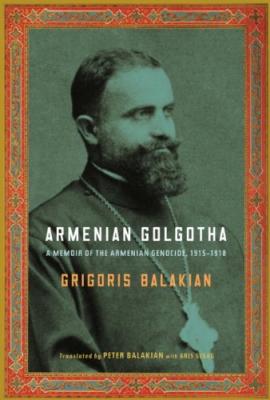
Armenian Golgotha: A Memoir of the Armenian Genocide, 1915-1918
Never before in English, Armenian Golgotha is the most dramatic and comprehensive eyewitness account of the first modern genocide.
On April 24, 1915, the priest Grigoris Balakian was arrested along with some 250 other intellectuals and leaders of Constantinople’s Armenian community. It was the beginning of the Ottoman Turkish government’s systematic attempt to eliminate the Armenian people from Turkey; it was a campaign that continued through World War I and the fall of the Ottoman Empire, by which time more than a million Armenians had been annihilated and expunged from their historic homeland. For Grigoris Balakian, himself condemned, it was also the beginning of a four-year ordeal during which he would bear witness to a seemingly endless caravan of blood.
Balakian sees his countrymen sent in carts, on donkeys, or on foot to face certain death in the desert of northern Syria. Many would not even survive the journey, suffering starvation, disease, mutilation, and rape, among other tortures, before being slaughtered en route. In these pages, he brings to life the words and deeds of survivors, foreign witnesses, and Turkish officials involved in the massacre process, and also of those few brave, righteous Turks, who, with some of their German allies working for the Baghdad Railway, resisted orders calling for the death of the Armenians. Miraculously, Balakian manages to escape, and his flight—through forest and over mountain, in disguise as a railroad worker and then as a German soldier—is a suspenseful, harrowing odyssey that makes possible his singular testimony.
Full of shrewd insights into the political, historical, and cultural context of the Armenian genocide—the template for the subsequent mass killings that have cast a shadow across the twentieth century and beyond—this memoir is destined to become a classic of survivor literature. Armenian Golgotha is sure to deepen our understanding of a catastrophic crime that the Turkish government, the Ottomans’ successor, denies to this day.
Terror in Chechnya is the definitive account of Russian war crimes in Chechnya. Emma Gilligan provides a comprehensive history of the second Chechen conflict of 1999 to 2005, revealing one of the most appalling human rights catastrophes of the modern era--one that has yet to be fully acknowledged by the international community. Drawing upon eyewitness testimony and interviews with refugees and key political and humanitarian figures, Gilligan tells for the first time the full story of the Russian military's systematic use of torture, disappearances, executions, and other punitive tactics against the Chechen population.
In Terror in Chechnya, Gilligan challenges Russian claims that civilian casualties in Chechnya were an unavoidable consequence of civil war. She argues that racism and nationalism were substantial factors in Russia's second war against the Chechens and the resulting refugee crisis. She does not ignore the war crimes committed by Chechen separatists and pro-Moscow forces. Gilligan traces the radicalization of Chechen fighters and sheds light on the Dubrovka and Beslan hostage crises, demonstrating how they undermined the separatist movement and in turn contributed to racial hatred against Chechens in Moscow.
A haunting testament of modern-day crimes against humanity, Terror in Chechnya also looks at the international response to the conflict, focusing on Europe's humanitarian and human rights efforts inside Chechnya.
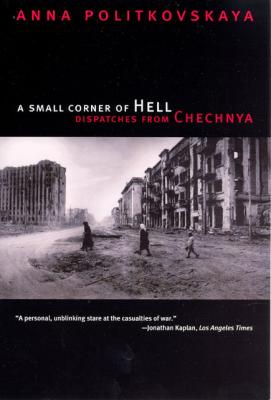
Chechnya, a 6,000-square-mile corner of the northern Caucasus, has struggled under Russian domination for centuries. The region declared its independence in 1991, leading to a brutal war, Russian withdrawal, and subsequent "governance" by bandits and warlords. A series of apartment building attacks in Moscow in 1999, allegedly orchestrated by a rebel faction, reignited the war, which continues to rage today. Russia has gone to great lengths to keep journalists from reporting on the conflict; consequently, few people outside the region understand its scale and the atrocities—described by eyewitnesses as comparable to those discovered in Bosnia—committed there.
Anna Politkovskaya, a correspondent for the liberal Moscow newspaper Novaya gazeta, was the only journalist to have constant access to the region. Her international stature and reputation for honesty among the Chechens allowed her to continue to report to the world the brutal tactics of Russia’s leaders used to quell the uprisings. A Small Corner of Hell: Dispatches from Chechnya is her second book on this bloody and prolonged war. More than a collection of articles and columns, A Small Corner of Hell offers a rare insider’s view of life in Chechnya over the past years. Centered on stories of those caught-literally-in the crossfire of the conflict, her book recounts the horrors of living in the midst of the war, examines how the war has affected Russian society, and takes a hard look at how people on both sides are profiting from it, from the guards who accept bribes from Chechens out after curfew to the United Nations. Politkovskaya’s unflinching honesty and her courage in speaking truth to power combine here to produce a powerful account of what is acknowledged as one of the most dangerous and least understood conflicts on the planet.
Anna Politkovskaya was assassinated in Moscow on October 7, 2006.
Richard Crampton presents a general introduction to Bulgaria at the cross-roads of Christendom and Islam. This concise history traces the country's growth from pre-history, through its days as the center of a powerful medieval empire and five centuries of Ottoman rule, to the political upheavals of the twentieth century which led to three wars. It highlights 1995 to 2004, a vital period during which Bulgaria endured financial meltdown, set itself seriously on the road to reform, elected its former King as prime minister, and finally secured membership in NATO and admission to the European Union.