Bosnian/Croatian/Serbian Related

MEDLI: the Middle Eastern & Mediterranean Language Institute at UW-Madison. For Summer 2023, we have additional FLAS funding opportunities and spaces available on our Turkish programs at all levels, in case any of your students are in need of funding or summer Turkish language options at a specific level. 

Also, if you have any students interested in learning Modern Hebrew at the Elementary Level this summer, we are offering students an automatic 50% tuition remission for that program.

Apply Here:

https://medli.wisc.edu/application/
For more information contact us at medli@lpo.wisc.edu

On Thursday, January 19, at 9 am US CT join the Slavic Reference Service at the University of Illinois for a webinar with the National Library of Serbia. The webinar is a part of the Meet the National Libraries series. Attendees will learn about physical and digital collections, services and preservation work at the National Library of Serbia as well as the Digital Library of Serbia. For more information and to register, please visit: https://forms.gle/ow6a5QwsnW931FYS6.  

Miljenko Jergović
Kin (Archipelago Books, 2021)

In this sprawling narrative spanning the twentieth century, Miljenko Jervović looks into the dusty corners of his family's past, illuminating them with a razor-sharp eye. Ordinary, forgotten objects – a grandfather's bee-keeping journals, a rusty benzene lighter, an army-issued raincoat – become the lenses through which Jergović investigates the joys and sorrows of three generations. Kin is in part an ode to Yugoslavia – taking us through the devastation of the First and Second World War, the Cold War, then the Bosnian War of the 1990s, through changing borders and perspectives, through social rituals at graveyards, through long walks within the labyrinths of Sarajevo and his own mottled memories, Jergović renders it all in candid detail. 

Translated by Russell Scott Valentino. 

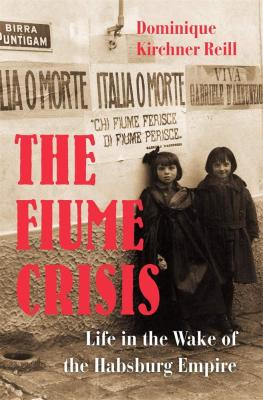
Dominique Kirchner Reill
The Fiume Crisis: Life in the Wake of the Habsburg Empire (Harvard University Press, 2020)

The Fiume Crisis recasts what we know about the birth of fascism, the rise of nationalism, and the fall of empire after World War I by telling the story of the three-year period when the Adriatic city of Fiume (today Rijeka, in Croatia) generated an international crisis.

In 1919 the multicultural former Habsburg city was occupied by the paramilitary forces of the flamboyant poet-soldier Gabriele D’Annunzio, who aimed to annex the territory to Italy and became an inspiration to Mussolini. Many local Italians supported the effort, nurturing a standard tale of nationalist fanaticism. However, Dominique Kirchner Reill shows that practical realities, not nationalist ideals, were in the driver’s seat. Support for annexation was largely a result of the daily frustrations of life in a “ghost state” set adrift by the fall of the empire. D’Annunzio’s ideology and proto-fascist charisma notwithstanding, what the people of Fiume wanted was prosperity, which they associated with the autonomy they had enjoyed under Habsburg sovereignty. In these twilight years between the world that was and the world that would be, many across the former empire sought to restore the familiar forms of governance that once supported them. To the extent that they turned to nation-states, it was not out of zeal for nationalist self-determination but in the hope that these states would restore the benefits of cosmopolitan empire.

Against the too-smooth narrative of postwar nationalism, The Fiume Crisis demonstrates the endurance of the imperial imagination and carves out an essential place for history from below.

Lecture 1-1:50 pm
John and Galia Kuo, the leaders of the Chicago-based ensemble Balkan Dances, will give a lecture on Balkan music and dance rhythms.

Workshop 2-3pm

Ensemble Balkan Dance will teach guests the steps of the most popular Balkan dances. In the end, the ensemble will give a mini-performance for the audience.

Exhibit
Hand-made instruments and nineteenth-century folk clothing will be on display during the event.

The Foreign Language and Area Studies (FLAS) Fellowships offer a stipend of $2,500 and tuition of up to $5,000 to undergraduate students concentrating in a modern foreign language and a program that includes international or area studies. Fellowships may be used for domestic or overseas intensive programs at the intermediate or advanced level of language study. Programs must last a minimum of six weeks. Eligible languages include Armenian, Bosnian, Croatian, Kazakh, Polish, Russian, Serbian, Turkish, Uzbek, and Yiddish. FLAS applications are ranked based on applicants' academic performance, letters of recommendation, application materials, and financial need. Applications due April 18, 2022. 

Subscribe to Bosnian/Croatian/Serbian Related