Performative Democracy explores a potential in political life that easily escapes theorists: the indigenously inspired enacting of democracy by citizens. Written by one who experienced an emerging public sphere within Communist Poland, the book seeks to identify the conditions for performativity-performing politics--in public life. It examines a broad spectrum of cultural, social, and political initiatives that facilitated the non-violent transformation of an autocratic environment into a democratic one. Examples of performativity range from experimental student theater, through the engaged political thinking of dissident Adam Michnik, the alternative culture, and the Solidarity movement, to the drama of the Round Table Talks (and their striking parallels in South Africa), and finally, the post-1989 efforts of feminist groups and women artists to defend the recently won right of free public discourse. The book argues that performative democracy, with its improvisational mode and imaginative solutions, deserves a legitimate place in our broader reflections on democracy. Matynia describes how two apparent miracles of recent history-that communism in Poland was brought down without violence and that apartheid in South Africa was ended without a bloodbath-were the results of hard work and a new approach to change that she calls "performative democracy." Matynia reveals amazing parallels between the drama of Poland's Round Table Talks in 1989 and the Truth Commissions in South Africa in 1994. Matynia describes how experimental student theater groups, though subsidized by a totalitarian regime afraid of any authentic public life, created little pockets of public space for free and meaningful expression that were augmented by uncensored underground publishing and further expanded by the Solidarity movement into a democratic society within the totalitarian state. Matynia describes in a personal way how in the 1970s student theater groups planted the seeds of an authentic public sphere, how underground publishers nurtured freedom of expression and social criticism, and how, after democratic elections, women artists in the 1990s fought to sustain the newly won right to free public discourse. Matynia traces in vivid human terms the democratic aspirations and practices that led to democratic change in Poland but went largely unnoticed by western media and policymakers.
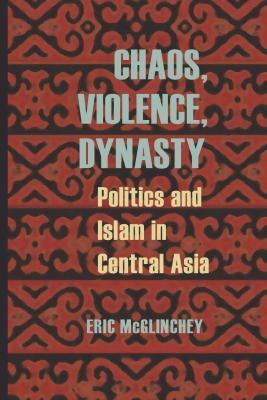
Chaos, Violence, Dynasty: Politics and Islam in Central Asia
In the post-Soviet era, democracy has made little progress in Central Asia. In Chaos, Violence, Dynasty, Eric McGlinchey presents a compelling comparative study of the divergent political courses taken by Kyrgyzstan, Uzbekistan, and Kazakhstan in the wake of Soviet rule. McGlinchey examines economics, religion, political legacies, foreign investment, and the ethnicity of these countries to evaluate the relative success of political structures in each nation.
McGlinchey explains the impact of Soviet policy on the region, from Lenin to Gorbachev. Ruling from a distance, a minimally invasive system of patronage proved the most successful over time, but planted the seeds for current “neo-patrimonial” governments. The level of direct Soviet involvement during perestroika was the major determinant in the stability of ensuing governments. Soviet manipulations of the politics of Uzbekistan and Kazakhstan in the late 1980s solidified the role of elites, while in Kyrgyzstan the Soviets looked away as leadership crumbled during the ethnic riots of 1990. Today, Kyrgyzstan is the poorest and most politically unstable country in the region, thanks to a small, corrupt, and fractured political elite. In Uzbekistan, Islam Karimov maintains power through the brutal suppression of disaffected Muslims, who are nevertheless rising in numbers and influence. In Kazakhstan, a political machine fueled by oil wealth and patronage underlies the greatest economic equity in the region, and far less political violence.
McGlinchey’s timely study calls for a more realistic and flexible view of the successful aspects of authoritarian systems in the region that will be needed if there is to be any potential benefit from foreign engagement with the nations of Central Asia, and similar political systems globally.
Exit Into History: A Journey through the New Eastern Europe
In this arresting, intimate narrative journey, award-winning Eva Hoffman returns to her Polish homeland and five other countries—Hungary, Romania, Bulgaria, and the two nations of the former Czechoslovakia—historically transformed by the demise of Communism. The result is the penetrating personal odyssey across the “other Europe” and a vivid portrayal of a landscape in the midst of change. Hoffman combines the wise perspective of an outsider and the passionate concern of a native daughter to illuminate the forces informing the region’s complex politics as she captures the texture of everyday life in a world in flux.
What the Kosovars Say and Demand: Collection of Studies, Articles, Interviews, and Commentaries Vol 2
This volume is the second part of the book What the Kosovars Say and Demand. Like the first volume, it includes interviews, talks and various articles published by intellectuals and other citizens of Kosovo in recent months in the Yugoslav and foreign press.
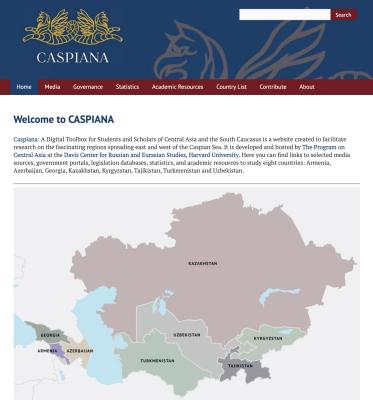
Caspiana: A Digital Toolbox for Students and Scholars of Central Asia and the South Caucasus
Caspiana: A Digital Toolbox for Students and Scholars of Central Asia and the South Caucasus is a website created to facilitate research on the fascinating regions spreading east and west of the Caspian Sea. It is developed and hosted by The Program on Central Asia at the Davis Center for Russian and Eurasian Studies, Harvard University. Here you can find links to selected media sources, government portals, legislation databases, statistics, and academic resources to study eight countries: Armenia, Azerbaijan, Georgia, Kazakhstan, Kyrgyzstan, Tajikistan, Turkmenistan and Uzbekistan.
The second edition of the annual magazine Common Ground is out! We believe it is a way to share common European ground, and celebrate Europe Day.
This magazine is not about the last days of corona but the future we ought to build out of it. What can we learn from the last one and a half year? What can we do better and how? There is much talk about the New Normal. Can you still remember the Normal just before corona hit? Trump looked confident to win his second presidential term. Despite the Greta Thunberg impact and all the talk about climate change CO2 emissions had reached another peak. California was burning yet again. The new European Commission looked little inspirational while Brexit reached its sad finale. The immediate Normal before corona should not be our reference point as we look into the future. So, what about the ‘new’ New?
There is plenty New in this magazine. This is intentional. You will read about the case for a Cultural Deal for Europe, may get inspired by the idea of a New European Bauhaus movement. We believe the time has come for a whole new chapter of European philanthropy. We see the future being imagined in European Pavilions springing up all over Europe. Challenges cry out for new solutions. This is what The Europe Challenge is about, a new initiative in the works with the libraries of Europe. We are ready for the future.
Further in this magazine you will discover European moments of hope, resilience and solidarity, why black lives matter, why we must not forget about Belarus, what the New Gospel means for Europe and what the Sisters of Europe have to say about the independent media. You will not find only one but four photo essays. That’s four times more than in our last edition. Finally, there is a short story on life in lockdown, just to remember it before we move on.
The website presents samples of original texts alongside their Russian translations. The comparison helps one not only to see the translator’s method and principles, but also to get an idea of how Russian readers understood and interpreted European political treatises throughout the “long” eighteenth century.
The website also provides a context for the key political concepts that entered the Russian language at the time. When the different contexts of a certain concept are put in chronological order, it will be possible to see how political terms changed their meaning, in other words, how the language and the semantics of Russian political culture evolved.
The database will provide scholars with a basis for further research in the history of language and political thought in Russia and will allow researchers and lovers of history to expand their understanding of the political discourse of eighteenth-century Russia.
Q*ASEEES Syllabi Collection on Queer Eastern Europe
The Society for the Promotion of LGBTQ Slavic, East European, & Eurasian Studies (Q*ASEEES) has launched a resources page on its website. Currently, the syllabi section is available, where you can have a look at diverse courses on queer Eastern Europe that have been taught in the USA, Europe, and Russia.
Hosted by the interim director of the Polish Studies Center, Dr. Elizabeth Cullen Dunn (Geography), i tak dalej... will bring you topical interviews with scholars, experts, activists, and more on all things Polish throughout the coming year.
i tak dalej can be listened to via the following podcast apps: