"Socialism Realized": Life in Communist Czechoslovakia, 1948-1989
This learning environment enables you to find and analyse multimedia content about the communist regimes in Europe. Using the Czechoslovak example, we describe the specifics of life in the Eastern bloc. The material here attempts to bring the experiences, thoughts, feelings and problems of people who lived during this era to life. Our aim is to reproduce the complexities and dilemmas of life under communism.
To most Americans, Russia remains as enigmatic today as it was during the Iron Curtain era. With the collapse of the Soviet Union, the country had an opportunity to face its tortured past. In Inside the Stalin Archives, Jonathan Brent asks, why didn't this happen? Why are the anti-Semitic Protocols of Zion sold openly in the lobby of the State Duma? Why are archivists under surveillance and phones still tapped? Why does Stalin, a man responsible for the deaths of millions of his own people, remain popular enough to appear on boxes of chocolate sold in Moscow's airport?
Brent draws on fifteen years of unprecedented access to high-level Soviet Archives to answer these questions. He shows us a Russia where, in 1992, used toothbrushes were sold on the sidewalks, while now shops are filled with luxury goods and the streets are jammed with Mercedes. Stalin's specter hovers throughout, and in the book's crescendo Brent takes us deep into the dictator's personal papers to glimpse the dark heart of the new Russia. Both cultural history and personal memoir, Inside the Stalin Archives is a deeply felt and vivid portrait of Russia in the twenty-first century.
One of the most notorious works of modern times, as well as one of the most influential, Capital is an incisive critique of private property and the social relations it generates. Living in exile in England, where this work was largely written, Marx drew on a wide-ranging knowledge of its society to support his analysis and create fresh insights. Arguing that capitalism would cause an ever-increasing division in wealth and welfare, he predicted its abolition and replacement by a system with common ownership of the means of production. Capital rapidly acquired readership among the leaders of social democratic parties, particularly in Russia in Germany, and ultimately throughout the world, to become a work described by Marx friend and collaborator Friedrich Engels as “the Bible of the working class.”
In the early 1960s, at the Dartmouth Conference, U.S. and Russian diplomats came together to engage in conversations concerning the connections between the two nations. These conversations have continued and have involved Russian and American citizens in open discussions of what they believe are the most important aspects of their political, economic, and social relationships. Research has been conducted examining the results of these public forums, and those results are presented in this edited volume. The perspectives of both citizens and diplomats described in this book offer valuable insights to those in academia, business, and others interested in better understanding the unique aspects of the relationship between the U.S. and Russia.
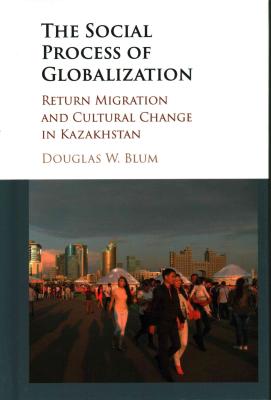
It is often argued that globalization fosters 'hybridity', as some cultural imports are accepted, while others are 'localized', and others still are rejected outright. Yet we know relatively little about the social processes and mechanisms involved in cultural globalization. This book offers an empirically rich and theoretically compelling analysis of how cultural globalization occurs, including the structural conditions, personal meanings and social interactions associated with various outcomes. Providing a detailed analysis of the experiences of young people from Kazakhstan who lived in the United States temporarily, the author asks, how do return migrants react to cultural differences in America, and what changes do they try to incorporate into their lives back in Kazakhstan? What kinds of negotiations ensue, and what explains their success or failure? In answering these questions, Douglas W. Blum combines insights from sociology and anthropology along with specialized research on globalization, migration and post-Soviet studies.
Hailed for her “fearless indictment of the most powerful man in Russia” (The Wall Street Journal), award-winning journalist Masha Gessen is unparalleled in her understanding of the events and forces that have wracked her native country in recent times. In The Future Is History, she follows the lives of four people born at what promised to be the dawn of democracy. Each of them came of age with unprecedented expectations, some as the children and grandchildren of the very architects of the new Russia, each with newfound aspirations of their own—as entrepreneurs, activists, thinkers, and writers, sexual and social beings.
Gessen charts their paths against the machinations of the regime that would crush them all, and against the war it waged on understanding itself, which ensured the unobstructed reemergence of the old Soviet order in the form of today’s terrifying and seemingly unstoppable mafia state. Powerful and urgent, The Future Is History is a cautionary tale for our time and for all time.
Signed by the author.
Related
This book was the subject of a "CEERES Voices" interview with the author. A full video of that interview is available on YouTube.
This resource is available "open access" to all users who create a JSTOR account here. A physical version is also located in the CEERES office, please email us for more information about access to the physical copy.
An online version of this publication is available here. A physical version is located in the CEERES office, please email us for more information about access to the physical copy.
The Warsaw Institute Review is a free Polish magazine of the Warsaw Institute Foundation. We would like to present a broad spectrum of topics concerning Poland, a leader among East-Central European countries, in the form of analytical articles on political, legal, economic, social, historical and institutional issues. The authors of the articles in The Warsaw Institute Review are, on the one hand, analysts and experts, and on the other hand, people who have an active and practical influence on Poland’s political, economic and cultural life.
An online version of this publication is available here. A physical version is located in the CEERES office, please email us for more information about access to the physical copy.
The Warsaw Institute Review is a free Polish magazine of the Warsaw Institute Foundation. We would like to present a broad spectrum of topics concerning Poland, a leader among East-Central European countries, in the form of analytical articles on political, legal, economic, social, historical and institutional issues. The authors of the articles in The Warsaw Institute Review are, on the one hand, analysts and experts, and on the other hand, people who have an active and practical influence on Poland’s political, economic and cultural life.