The HAVEL CONVERSATIONS Oral History Project has filmed and posted online interviews with ten prominent U. S. politicians, academics, writers, and artists, including Bill Clinton, Henry Kissinger, Madeleine Albright, Timothy Snyder, and Suzanne Vega. The conversations present firsthand memories of Havel, his colleagues, and the historical events he inspired. Equally important, they constitute a highly interesting set of statements on social and political issues affecting Americans and Europeans today. With deep political and social shifts taking place on both sides of the Atlantic, our interviewees intertwined their memories of Havel with questions about human rights, morality, and the decline of democratic values.
This encyclopedia hosts scholarly entries on prominent thinkers and concepts in Russian and Soviet philosophy, with an emphasis on the period from 1950 to the present. Entries are organized by keywords.
All entries are written to be accessible to non-specialists and specialists alike, distill a vast amount of primary source information into 2000-4000 words, and seek to condense the main ideas of philosophers into a series of 5-7 main “keywords,” which are then linked across the site to draw conceptual maps of philosophical ideas across thinkers and movements.
Fasti Online(International Association of Classical Archaeology )
Fasti Online
FASTI Online provides a searchable database of archaeological excavations in Southeast Europe since the year 2000. It has excavation reports on sites in Bulgaria, Italy, Macedonia, Malta, Romania, Serbia, Croatia and Albania. Fasti Online is a project of the International Association of Classical Archaeology (AIAC) and the Center for the Study of Ancient Italy of the University of Texas at Austin (CSAI).
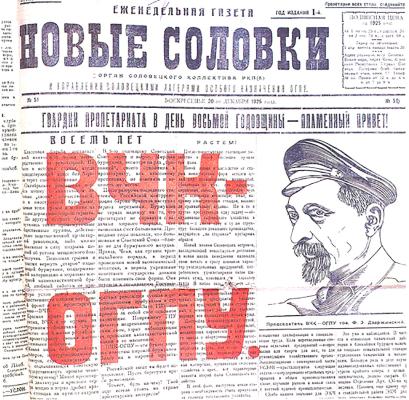
The virtual exhibition is devoted to the Solovki prison camp and the cultural resistance of its inmates. It is the result of a collaborative effort with The Hunterian Museum and Russian partners (mainly Memorial, but also state institutions such as the Museum of the History of the Gulag). The exhibition displays unpublished documents from Russian archives, and includes prisoners’ paintings, theatre photographs, a selection of literary texts composed by the prisoners (with audio recordings in Russian and English) and some historical documents such as the personal file of Naftalii Frenkel’, the camp’s guide prepared by the prisoner Vladimir Zotov for his fiancée and the photo album created by camp administration as a gift for Gor’kii, Stalin and Kirov.
"Socialism Realized": Life in Communist Czechoslovakia, 1948-1989
This learning environment enables you to find and analyse multimedia content about the communist regimes in Europe. Using the Czechoslovak example, we describe the specifics of life in the Eastern bloc. The material here attempts to bring the experiences, thoughts, feelings and problems of people who lived during this era to life. Our aim is to reproduce the complexities and dilemmas of life under communism.
Online Primary Sources(Centre for Russian, Caucasian and Central European Studies, 2021)
The Online Primary Sources database aims to provide researchers and students with sources from Russia, the Caucasus, Central Asia, Eastern and Central Europe put online in recent years thanks to intensive library digitization policies in these zones as well as in the West.
The database is curated by the Centre for Russian, Caucasian and Central European Studies (CERCEC), in Paris (France). CERCEC is a CNRS-EHESS joint research unit. Read more about CERCEC here.
The New Review Inc. has uploaded a free digital collection of our archival issues – more than 30 old copies of the Noviy Zhurnal in a digital format. The project of digitizing the entire book archive of Noviy Zhurnal / The New Review – over 200 unique copies from 1942 to 2000 - has been started! Please go here (https://newreviewinc.com/archive/) to view.
(Russian language link)
Michael David-Fox, Peter Holquist, Alexander M. Martin
An original transnational history of Russia and Germany during the critical era of the world wars. By examining the mutual perceptions and misperceptions within each country, the contributors reveal the psyche of the Russian-German dynamic and its use as a powerful political and cultural tool.
Chapter 1. Introduction: Entangled Histories in the Age of Extremes
Michael David-Fox
Chapter 2. “A Belgium of Our Own”: The Sack of Russian Kalisz, August 1914
Laura Engelstein
Chapter 3. United by Barbed Wire: Russian POWs in Germany, National Stereotypes, and International Relations, 1914–1922
Oksana Nagornaya
Chapter 4. Iron Revolutionaries and Salon Socialists: Bolsheviks and German Communists in the 1920s and 1930s
Bert Hoppe
Chapter 5. Back from the USSR: The Anti-Comintern’s Publications on Soviet Russia in Nazi Germany, 1935–1941
Jan C. Behrends
Chapter 6. Return to Soviet Russia: Edwin Erich Dwinger and the Narratives of Barbarossa 109
Peter Fritzsche
Chapter 7. “The Diaries of Fritzes and the Letters of Gretchens”: Personal Writings from the German-Soviet War and Their Readers 123
Jochen Hellbeck
Chapter 8. Ehrenburg and Grossman: Two Cosmopolitan Jewish Writers Reflect on Nazi Germany at War 154
Katerina Clark
Chapter 9. The Intelligentsia Meets the Enemy: Educated Soviet Officers in Defeated Germany, 1945 176
Oleg Budnitskii
Chapter 10. Mortal Embrace: Germans and (Soviet) Russians in the First Half of the Twentieth Century 228
A groundbreaking study of the complexities of the Hungarian working class, its relationship to the Communist Party, and its major political role during the foundational period of socialism (1944–1958).