This expert survey provides a complete picture of the remarkable variety and magnificent wealth of the numerous forms in which art has expressed itself in Russia.
Tamara Talbot Rice, the greatest english authority on Russian art, has set out to cover the entire subject from its beginnings in tenth-century Kiev, the Byzantine-influenced cradle of Russian culture, to the post-revolutionary period, and death of the great patron, Diagilhev. Mrs Talbot Rice discusses sculpture, metalwork, jewellery, ceramics and folk-art - all of which make important contributions to the great cultural tradition of Russia.
Particular note must be made of the plates in this book since many of the photographs have been specially obtained from Russia and are reproduced here for the first time.
This historical survey of Central Europe covers a region that encompasses contemporary Germany, Poland, the Czech Republic, Slovakia, Austria, Hungary, Slovenia, and Croatia. Author Lonnie R. Johnson illuminates the competing religious, cultural, economic, national, and ideological interests that have driven the history of Central Europe in the past millennium. Each chapter is thematically organized around issues or events that are key to developing an appreciation for the historical and political dynamics of the region, particularly in the nineteenth and twentieth centuries. This third edition also contains a new concluding chapter and epilogue and several redesigned and updated maps.
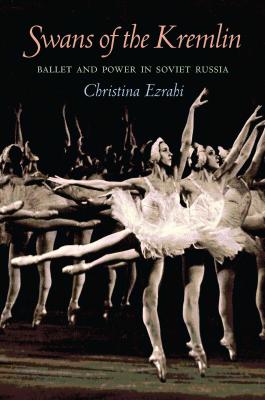
A fascinating glimpse at the collision of art and politics during the first fifty years of the Soviet period. Ezrahi shows how the producers and performers of Russia’s two major ballet troupes quietly but effectively resisted Soviet cultural hegemony during this period.
Gale Stokes' The Walls Came Tumbling Down offered one of the most respected interpretations of the East European revolutions of 1989 for many years. It provides a sweeping yet vivid narrative of the two decades of developments that led from the Prague Spring of 1968 to the collapse of communism in 1989. Highlights of that narrative include, among other things, discussions of Solidarity and civil society in Poland, Charter 77 and the Velvet Revolution in Czechoslovakia, and the bizarre regime of Romania's Nikolae Ceauescu and his violent downfall. In this second edition, now appropriately subtitled Collapse and Rebirth in Eastern Europe, Stokes not only has revised these portions of the book in the light of recent scholarship, but has added three new chapters covering the post-communist period, including analyses of the unification of Germany and the collapse of the Soviet Union, narratives of the admission of many of the countries of the region to the European Union, and discussion of the unfortunate outcomes of the Wars of Yugoslav Succession in the Western Balkans.
After the exuberance that marked the revolutions of 1989, the countries of Eastern Europe have faced the breathtakingly ambitious task of remaking their societies. Simultaneously they have sought to build liberal democracies based on market economics, while confronting reassertions of claims for national independence long suppressed. Taking up where his previous book Surge to Freedom ended, J. F. Brown’s Hopes and Shadows analyzes the results of the first four years of Eastern Europe’s separation from communist rule and the prospects for the future.
The forces at work in the midst of this revolution are examined from a perspective that is necessarily both historical and contemporary as the complex relationship between the tasks that face these countries and the legacy of their communist and pre-communist past shape the difficult present. As the usefulness of the designation "Eastern Europe" is itself questioned, Brown provides both regional and country-by-country analysis of the political situation. The Czech Republic, Slovakia, Hungary, and Poland are grouped together, as are Romania, Bulgaria, and Albania, to address questions such as the development of liberal democratic culture, the activation of democratic institutions and procedures, and the future of former communist bureaucracies. He considers the former Yugoslavia—now torn violently apart—largely as a separate case. The theoretical, political, social, financial, cultural, and psychological dimensions of the transition from socialism to a market economy are discussed in detail. The final aspect of this revolution, the failure of which most immediately threatens the entire process, is the attempt to build new and stable national statehoods. Brown explores the history and impact of the current reemergence of nationalism and the dangers it represents.
A comprehensive and authoritative survey, J. F. Brown’s analysis and presentation of the contemporary Eastern European political landscape will be essential reading for scholars and specialists and of great interest to general readers.
To most Americans, Russia remains as enigmatic today as it was during the Iron Curtain era. With the collapse of the Soviet Union, the country had an opportunity to face its tortured past. In Inside the Stalin Archives, Jonathan Brent asks, why didn't this happen? Why are the anti-Semitic Protocols of Zion sold openly in the lobby of the State Duma? Why are archivists under surveillance and phones still tapped? Why does Stalin, a man responsible for the deaths of millions of his own people, remain popular enough to appear on boxes of chocolate sold in Moscow's airport?
Brent draws on fifteen years of unprecedented access to high-level Soviet Archives to answer these questions. He shows us a Russia where, in 1992, used toothbrushes were sold on the sidewalks, while now shops are filled with luxury goods and the streets are jammed with Mercedes. Stalin's specter hovers throughout, and in the book's crescendo Brent takes us deep into the dictator's personal papers to glimpse the dark heart of the new Russia. Both cultural history and personal memoir, Inside the Stalin Archives is a deeply felt and vivid portrait of Russia in the twenty-first century.
ABSOLUTE ZHIRINOVSKY: A Transparent View of the Distinguished Russian Statesman by Graham Frazer & George Lancelle. British journalists Frazer and Lancelle combine trenchant analysis with excerpts from Vladimir Zhirinovsky’s speeches and writings in an alarming study of the ultra-nationalist politician who won 24% of the vote in the 1993 Russian elections. Zhirinovsky veers between shameless demagoguery and blatant lunacy: He threatens to use nuclear weapons to blackmail Germany, claims the “right” to shoot 100,000 people after his election to ensure the peace and demands control of Afghanistan, Iran and Turkey. The authors note that the popular comparison between Russia and Weimar Germany is inapt. Even in 1932, Germany had a powerful economy; the Russian industrial base is inefficient and mismanaged, making any relief of the confusion and suffering there unlikely--and increasing the appeal of Zhirinovsky’s right-wing insanity.
One of the most notorious works of modern times, as well as one of the most influential, Capital is an incisive critique of private property and the social relations it generates. Living in exile in England, where this work was largely written, Marx drew on a wide-ranging knowledge of its society to support his analysis and create fresh insights. Arguing that capitalism would cause an ever-increasing division in wealth and welfare, he predicted its abolition and replacement by a system with common ownership of the means of production. Capital rapidly acquired readership among the leaders of social democratic parties, particularly in Russia in Germany, and ultimately throughout the world, to become a work described by Marx friend and collaborator Friedrich Engels as “the Bible of the working class.”
The aim of this book is to unravel the tangled story of the four revolts, to examine their nature, course, and outcome, and to analyze their ultimate historical significance. Who were the rebels? What were their motives, social origins, and modes of behavior? What did they want and what did they achieve? Such are the questions this work will try to answer. Comparisons between the revolts will be made throughout the text, and especially in the concluding section of each chapter, while a final chapter will evaluate the overall significance of the revolts and their impact on the subsequent history of Russia. In particular, an effort will be made to determine the extent to which they foreshadowed the revolutions of 1905 and 1917, which so profoundly affected the course of contemporary history.
Of all the despots of our time, Joseph Stalin lasted the longest and wielded the greatest power, and his secrets have been the most jealously guarded—even after his death.
In this book, the first to draw from recently released archives, Robert Conquest gives us Stalin as a child and student; as a revolutionary and communist theoretician; as a political animal skilled in amassing power and absolutely ruthless in maintaining it. He presents the landmarks of Stalin’s rule: the class with Lenin; collectivization; the Great Terror; the Nazi-Soviet pact and the Nazi-Soviet war; the anti-Semitic campaign that preceded his death; and the legacy he left behind.
Distilling a lifetime’s study, weaving detail, analysis, and research, Conquest has given us an extraordinarily powerful narrative of this incredible figure.