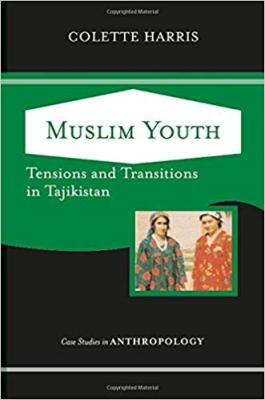
Since the breakup of the Soviet Union, the peoples of Central Asia (Tajikistan, Kazakhstan, Kyrgyzstan, Turkmenistan, and Uzbekistan) have been exposed to new, Western influences that stress individualism at the expense Central Asian traditions of family and communalism. Young men in particular are exposed to new ideas and lifestyles as they travel in large numbers outside their native republics for the first time, even as contemporary Islam exerts itself as a potent force for cultural conservatism, especially for women. As a result, young Central Asians today confront a complex mixture of the old and the new that strains personal relations, especially within the family, between generations, and between spouses.Relying on the author's extensive fieldwork, Muslim Youth devotes separate chapters to family life, education, dating, and marriage and the family in Dushanbe, the capital of Tajikistan. Throughout the book, emblematic life stories vividly portray the hopes and concerns of Tajiks, teasing out the complexity of modernity versus tradition and individualism versus collectivism.
The legend of the Amazons, beautiful, bloodthirsty warrior women thundering across arid battlefields, has been speculated over for thousands of years. Greek myths are filled with mention of the exploits, from Homer, who writes that the Amazons fought in the Trojan War, to Herodotus, the father of History, who gives their last known location as the steppes of Southern Russia. Each account speaks of the women's ild-eyed ferocity and savegery in battle. But the question remains: are they mythical or real?
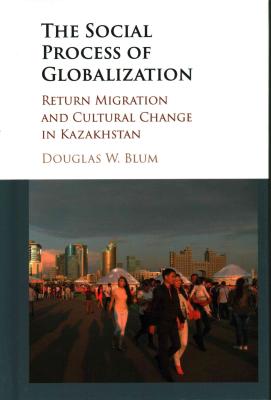
It is often argued that globalization fosters 'hybridity', as some cultural imports are accepted, while others are 'localized', and others still are rejected outright. Yet we know relatively little about the social processes and mechanisms involved in cultural globalization. This book offers an empirically rich and theoretically compelling analysis of how cultural globalization occurs, including the structural conditions, personal meanings and social interactions associated with various outcomes. Providing a detailed analysis of the experiences of young people from Kazakhstan who lived in the United States temporarily, the author asks, how do return migrants react to cultural differences in America, and what changes do they try to incorporate into their lives back in Kazakhstan? What kinds of negotiations ensue, and what explains their success or failure? In answering these questions, Douglas W. Blum combines insights from sociology and anthropology along with specialized research on globalization, migration and post-Soviet studies.